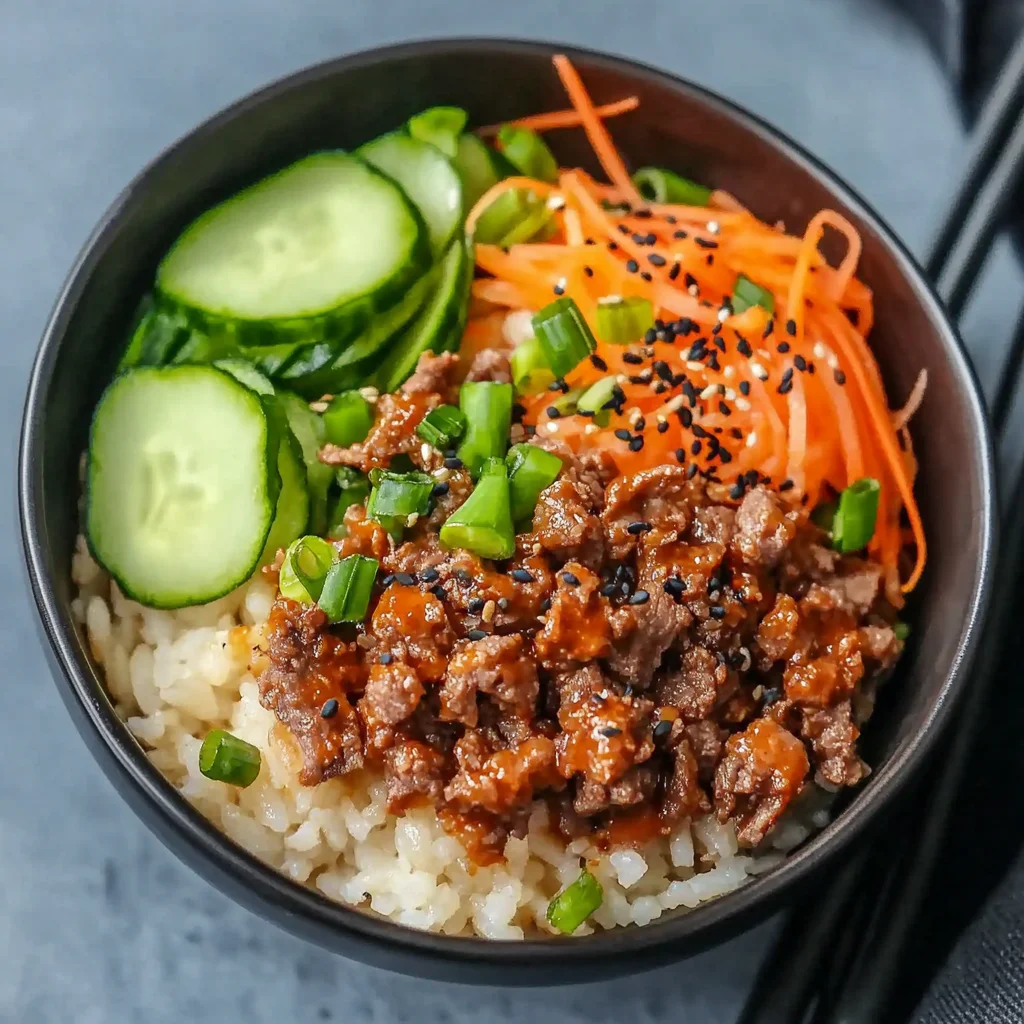
Quick, bold, and satisfying Korean Beef Rice Bowls with a creamy gochujang mayo drizzle make for a delightful meal. This dish is perfect for various occasions, from a busy weeknight dinner to a cozy weekend gathering. What sets these bowls apart is their customizable nature, allowing you to tweak toppings and spice levels to suit your taste buds.
Why You’ll Love This Recipe
- Quick Preparation: This recipe takes only 20 minutes from start to finish, making it ideal for busy nights.
- Flavor-Packed: The combination of gochujang and sesame oil brings an authentic Korean flavor that will satisfy your cravings.
- Customizable Toppings: You can easily personalize your bowls with fresh veggies, herbs, or additional sauces.
- Family-Friendly: Even picky eaters will enjoy this delicious mix of beef and rice topped with their favorite condiments.
- Healthy Ingredients: Packed with protein and vitamins from the vegetables, this dish keeps your meal wholesome.
Tools and Preparation
To make Korean Beef Rice Bowls, gather your kitchen tools. Having the right equipment can streamline your cooking process and enhance the overall experience.
Essential Tools and Equipment
- Large frying pan
- Small mixing bowl
- Whisk
- Measuring spoons
- Knife and cutting board
Importance of Each Tool
- Large frying pan: Provides ample space for browning the beef evenly.
- Small mixing bowl: Ideal for preparing sauces without creating extra mess.
- Whisk: Ensures all sauce ingredients are well-combined for optimal flavor.
Ingredients
Ingredients:
– 1 tsp freshly grated garlic
– 1 tsp freshly grated ginger
– 3 tbsp all-purpose soy sauce
– 2 tbsp brown sugar
– 1 tbsp sesame oil
– 1 tbsp gochujang (adjust for spice preference, see note 1 for substitutions)
– 1 tsp rice vinegar
– 1 tbsp sesame seeds, plus extra to garnish
– 2 tbsp extra-virgin olive oil or neutral oil
– 500 g (1 lb 2 oz) minced (ground) beef
– 2 spring onions (scallions), finely sliced, 1 tbsp reserved for garnish
– 3 tbsp whole-egg mayonnaise (see note 2 about dairy-free)
– 1 tsp gochujang
– ½ tsp sesame oil
– ½ tsp rice vinegar
– 2 cups (370 g) cooked jasmine rice
– 1 cup (240 g) kimchi
– 1 carrot, julienned
– 1 Lebanese (short) cucumber, sliced into half moons
For Garnish
- 2 tablespoons fresh parsley, finely chopped
How to Make Korean Beef Rice Bowls
Step 1: Prepare the Sauce
In a small bowl, whisk together the garlic, ginger, soy sauce, brown sugar, sesame oil, gochujang, rice vinegar, and sesame seeds until combined. Set aside.
Step 2: Cook the Beef
Heat the oil in a large frying pan over medium-high heat. Add the minced beef and cook until browned. Break up the meat as it cooks.
Once browned:
* Pour in the stir-fry sauce.
* Stir well to coat the beef.
* Simmer for 2–3 minutes until the sauce thickens slightly.
Turn off the heat and stir through the spring onion.
Step 3: Make Gochujang Mayo
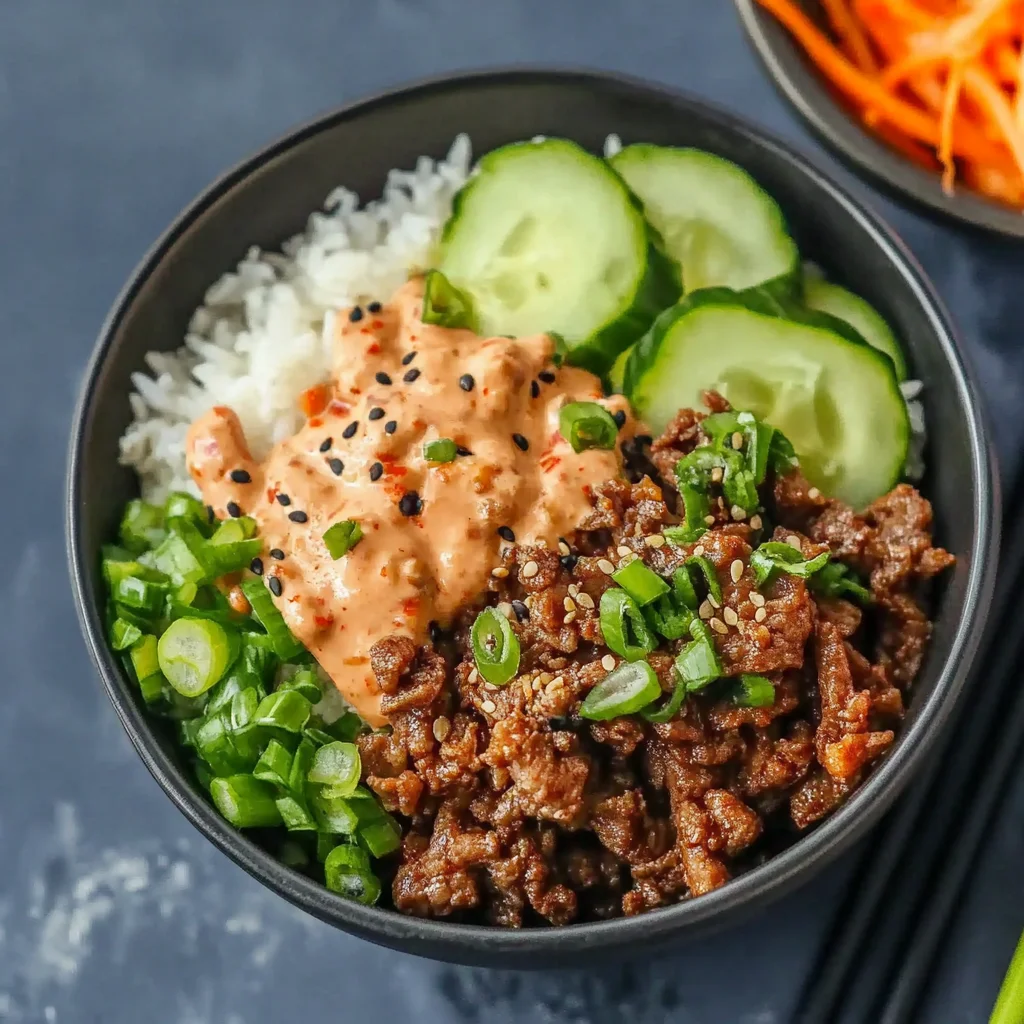
In another small bowl, whisk together the mayonnaise, gochujang, sesame oil, and rice vinegar until smooth. Set aside.
Step 4: Assemble Your Bowls
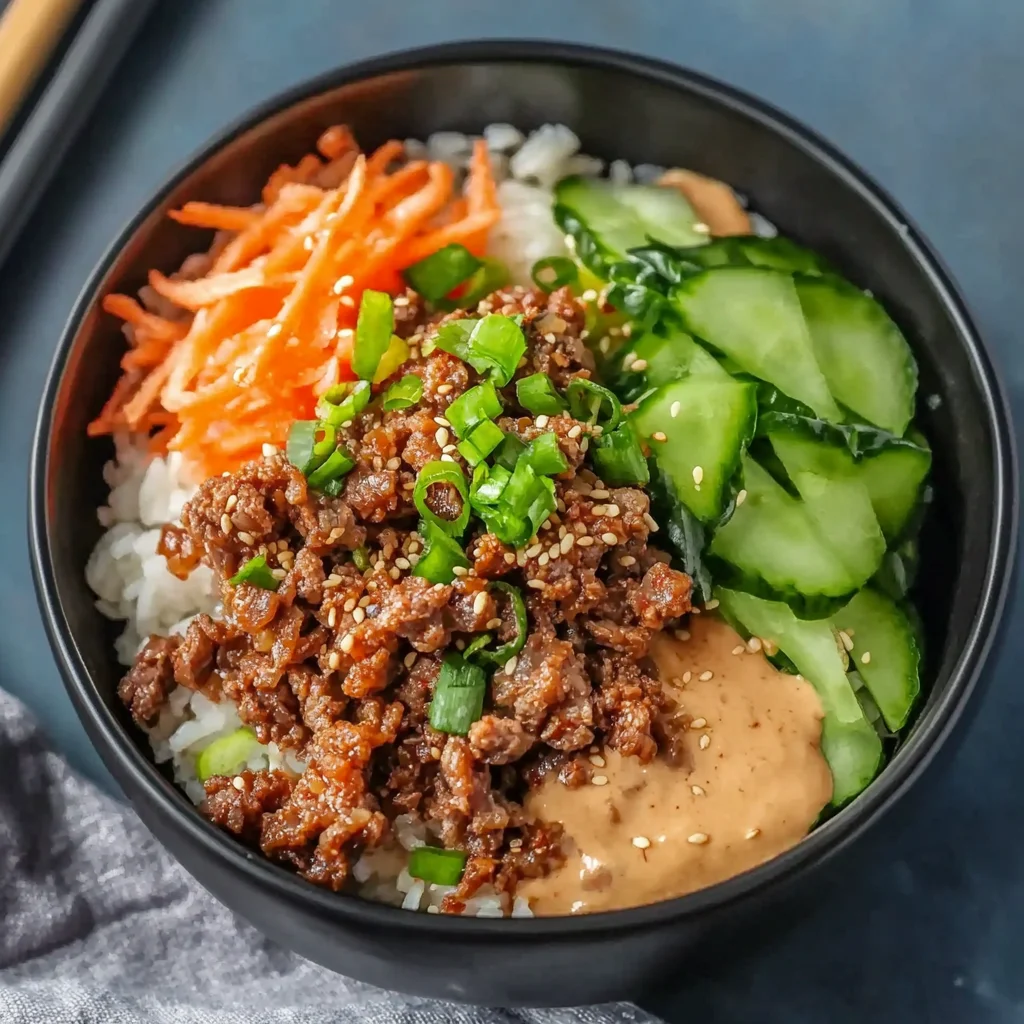
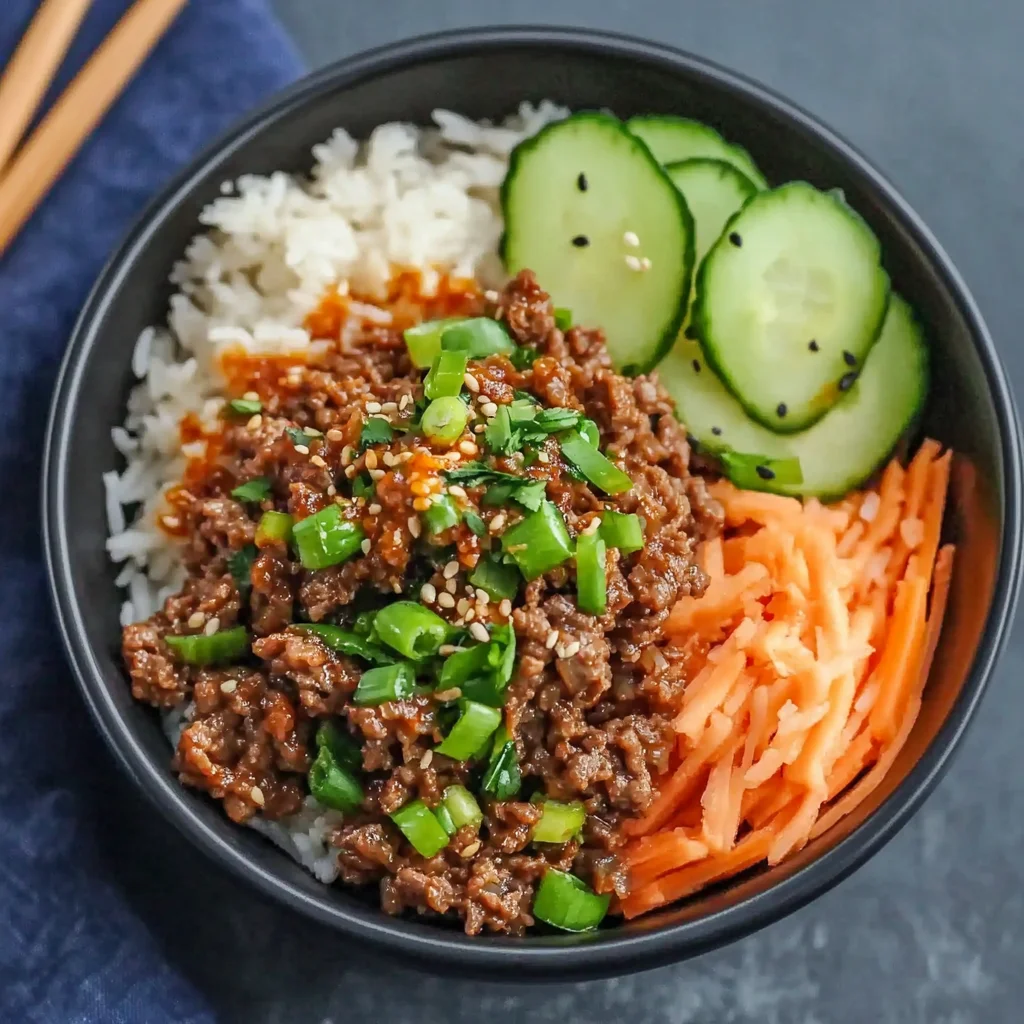
Divide the cooked jasmine rice among four bowls. Top each bowl with:
* The Korean beef mixture
* A generous serving of kimchi
* Julienned carrot
* Sliced cucumber
Drizzle the gochujang mayo over everything. Garnish with extra sesame seeds and spring onion. Serve immediately!
How to Serve Korean Beef Rice Bowls
Korean Beef Rice Bowls are a versatile dish that can be tailored to suit your taste and preferences. Here are some great serving suggestions to elevate your meal experience.
Add Fresh Vegetables
- Carrots: Julienned or shredded carrots add a crunchy texture and sweetness.
- Cucumbers: Sliced Lebanese cucumbers provide a refreshing contrast to the savory beef.
- Spinach: Lightly sautéed spinach adds nutrition and vibrant color.
Top with Fresh Herbs
- Cilantro: Fresh cilantro can enhance the flavor profile with its bright notes.
- Mint Leaves: A sprinkle of mint leaves offers a unique, aromatic twist.
Include Extra Sauces
- Soy Sauce: A drizzle of extra soy sauce can amplify the umami flavor.
- Sesame Oil: A few drops of sesame oil will add richness and depth.
Serve with Pickles
- Kimchi Variations: Try different types of kimchi for varying levels of spice and tanginess.
- Pickled Radish: These provide a sweet and sour crunch that complements the beef.
How to Perfect Korean Beef Rice Bowls
To ensure your Korean Beef Rice Bowls are delicious every time, keep these tips in mind:
- Bold Marinate Early: Letting the beef marinate for at least 30 minutes enhances its flavor.
- Fresh Ingredients Matter: Use fresh vegetables and herbs for the best taste and nutrition.
- Adjust Spice Levels: Modify the amount of gochujang according to your heat preference.
- Cook Rice Properly: Fluffy jasmine rice serves as the perfect base; rinse before cooking to remove excess starch.
- Don’t Overcook Beef: Cook until just browned to keep it juicy and tender.
- Garnish Wisely: Add toppings just before serving for maximum freshness.
Best Side Dishes for Korean Beef Rice Bowls
Pairing side dishes with your Korean Beef Rice Bowls can create a well-rounded meal. Here are some excellent options:
- Steamed Broccoli: Lightly steamed broccoli provides fiber and balances the meal’s richness.
- Fried Dumplings: Crispy dumplings add texture and can be filled with various ingredients.
- Miso Soup: A warm bowl of miso soup complements the flavors of Korean cuisine beautifully.
- Seasoned Seaweed Salad: This salad brings a salty crunch that pairs well with the beef.
- Spicy Tofu Bites: Crispy tofu bites offer a hearty, plant-based protein option alongside the beef.
- Sweet Potato Fries: The sweetness from fries contrasts nicely with savory elements in the bowl.
Common Mistakes to Avoid
When preparing Korean Beef Rice Bowls, it’s important to pay attention to details. Here are some common mistakes to avoid for the best results.
- Using low-quality beef: Selecting a tough or low-fat ground beef can lead to dry and chewy rice bowls. Choose high-quality minced beef for tenderness and flavor.
- Not adjusting spice levels: Gochujang can be quite spicy. If you’re serving this dish to kids or those sensitive to heat, start with less gochujang and gradually add more to taste.
- Skipping the sauce thickening step: Failing to simmer the sauce long enough can result in watery bowls. Make sure to let it cook until it thickens slightly for better flavor and texture.
- Overcooking the vegetables: Adding veggies like carrots and cucumbers too early may make them mushy. Add them just before serving for a fresh crunch.
- Neglecting garnishes: Garnishes like sesame seeds and spring onions add flavor and color. Don’t skip these; they enhance both presentation and taste.
Refrigerator Storage
- Store leftovers in an airtight container.
- Consume within 3-4 days for optimal freshness.
Freezing Korean Beef Rice Bowls
- Freeze in individual portions for convenience.
- Use freezer-safe containers or zip-top bags, removing excess air.
- Best used within 2-3 months for best taste.
Reheating Korean Beef Rice Bowls
- Oven: Preheat oven to 350°F (175°C). Place the rice bowl in an oven-safe dish, cover with foil, and heat for about 15-20 minutes.
- Microwave: Place in a microwave-safe bowl, cover loosely, and heat on medium power for 1-2 minutes, stirring halfway through.
- Stovetop: Heat in a skillet over medium heat, stirring frequently until warmed through. Add a splash of water if needed to prevent sticking.
Frequently Asked Questions
How can I customize my Korean Beef Rice Bowls?
You can add a variety of toppings such as avocado, pickled radishes, or additional vegetables based on your preferences.
What type of rice is best for Korean Beef Rice Bowls?
Jasmine rice is recommended for its fluffy texture and subtle fragrance that pairs well with the flavors of the dish.
Can I make these bowls dairy-free?
Yes! You can substitute regular mayonnaise with dairy-free alternatives to maintain the creamy gochujang mayo without dairy.
How do I store leftovers of Korean Beef Rice Bowls?
Store leftovers in an airtight container in the refrigerator for up to 3-4 days or freeze them for longer storage.
What can I serve with Korean Beef Rice Bowls?
These bowls pair well with sides like steamed broccoli or a simple salad to balance out the meal’s richness.
Final Thoughts
Korean Beef Rice Bowls offer a delightful combination of bold flavors that appeal to various tastes. The recipe is quick, customizable, and perfect for weeknight dinners. Whether you prefer extra spice or additional veggies, this dish allows you to get creative while enjoying a hearty meal. Give it a try!
Korean Beef Rice Bowls
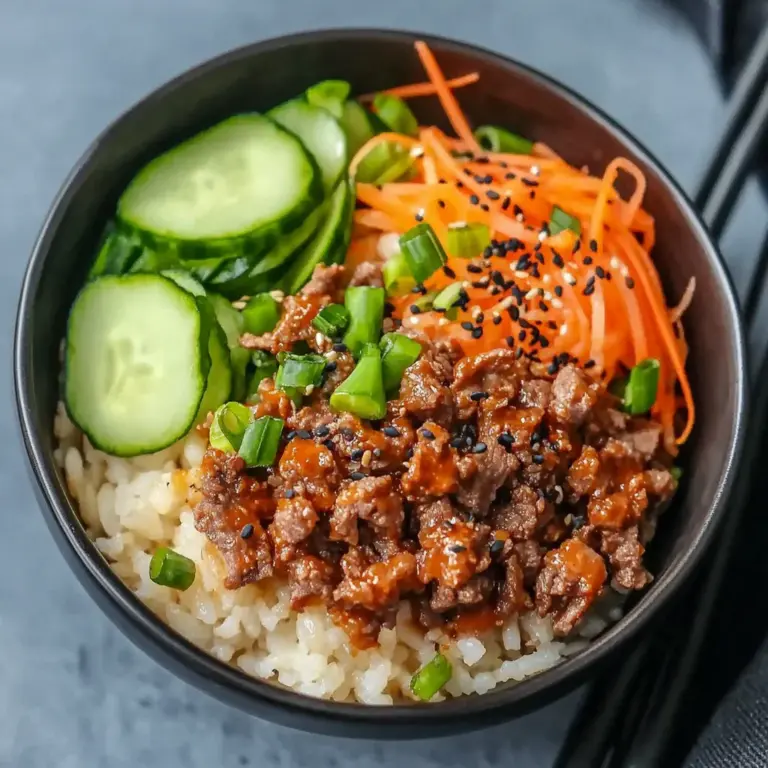
Indulge in the vibrant flavors of Korean Beef Rice Bowls, a meal that packs bold taste and quick preparation into one delightful dish. In just 20 minutes, you can create a satisfying bowl filled with savory minced beef, fresh vegetables, and a creamy gochujang mayo drizzle. Perfect for both busy weeknights and cozy gatherings, these bowls are easily customizable to cater to every palate. Whether you prefer adding extra spice or a variety of toppings, this recipe invites creativity while ensuring a wholesome, family-friendly dining experience.
- Total Time: 20 minutes
- Yield: Serves 4
Ingredients
- 1 tsp freshly grated garlic
- 1 tsp freshly grated ginger
- 3 tbsp soy sauce
- 2 tbsp brown sugar
- 1 tbsp sesame oil
- 1 tbsp gochujang
- 500 g minced beef
- 2 cups cooked jasmine rice
- Kimchi and fresh vegetables for topping
Instructions
- Prepare the sauce by whisking garlic, ginger, soy sauce, brown sugar, sesame oil, gochujang, rice vinegar, and sesame seeds in a small bowl.
- In a large frying pan over medium-high heat, cook the minced beef until browned. Add the sauce mixture and simmer until thickened.
- For the gochujang mayo, whisk mayonnaise with additional gochujang, sesame oil, and rice vinegar until smooth.
- Assemble each bowl with jasmine rice topped with the Korean beef mixture, kimchi, vegetables, and drizzle with gochujang mayo.
- Prep Time: 10 minutes
- Cook Time: 10 minutes
- Category: Main
- Method: Frying
- Cuisine: Korean
Nutrition
- Serving Size: 1 serving
- Calories: 650
- Sugar: 8g
- Sodium: 820mg
- Fat: 32g
- Saturated Fat: 10g
- Unsaturated Fat: 18g
- Trans Fat: 0g
- Carbohydrates: 62g
- Fiber: 3g
- Protein: 34g
- Cholesterol: 85mg
Keywords: Adjust the amount of gochujang based on your spice preference. Feel free to add more veggies or herbs for extra flavor and nutrition. Store leftovers in an airtight container for up to 4 days or freeze for longer shelf life.