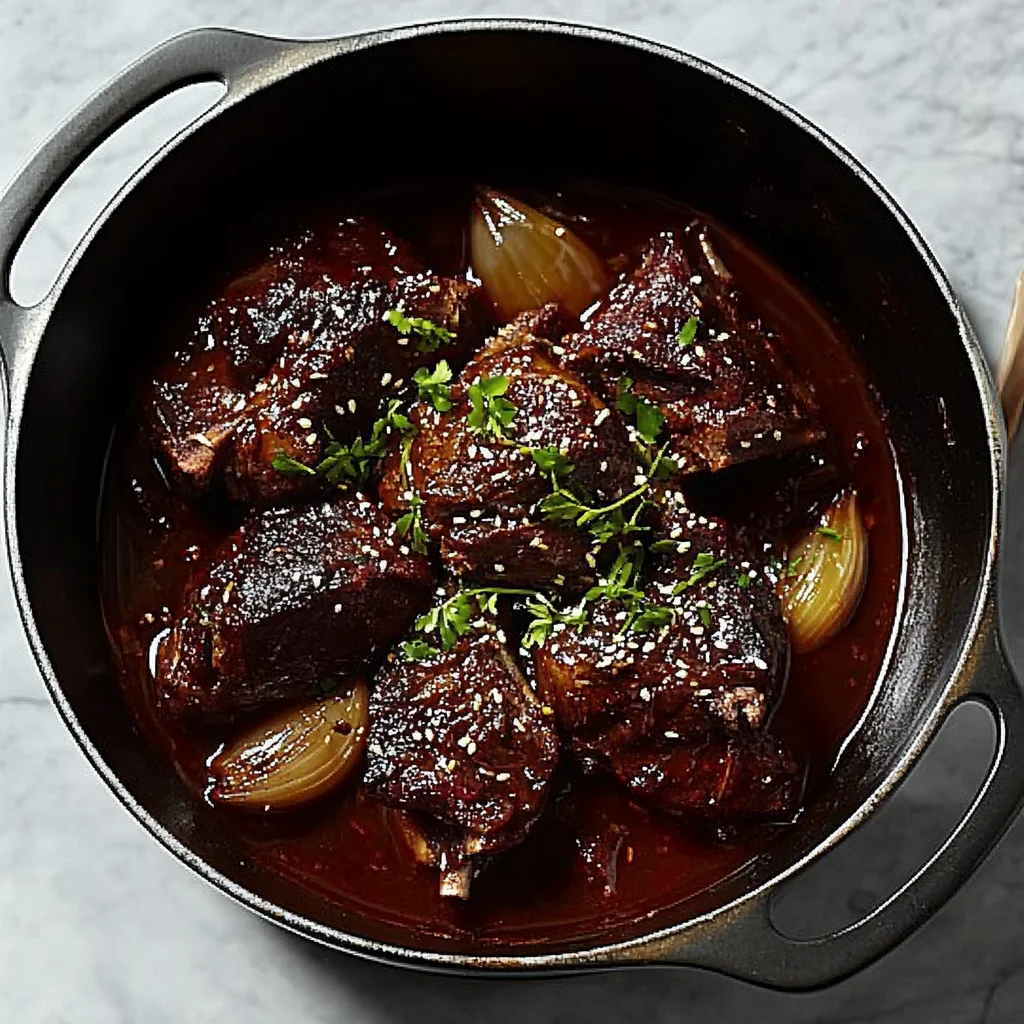
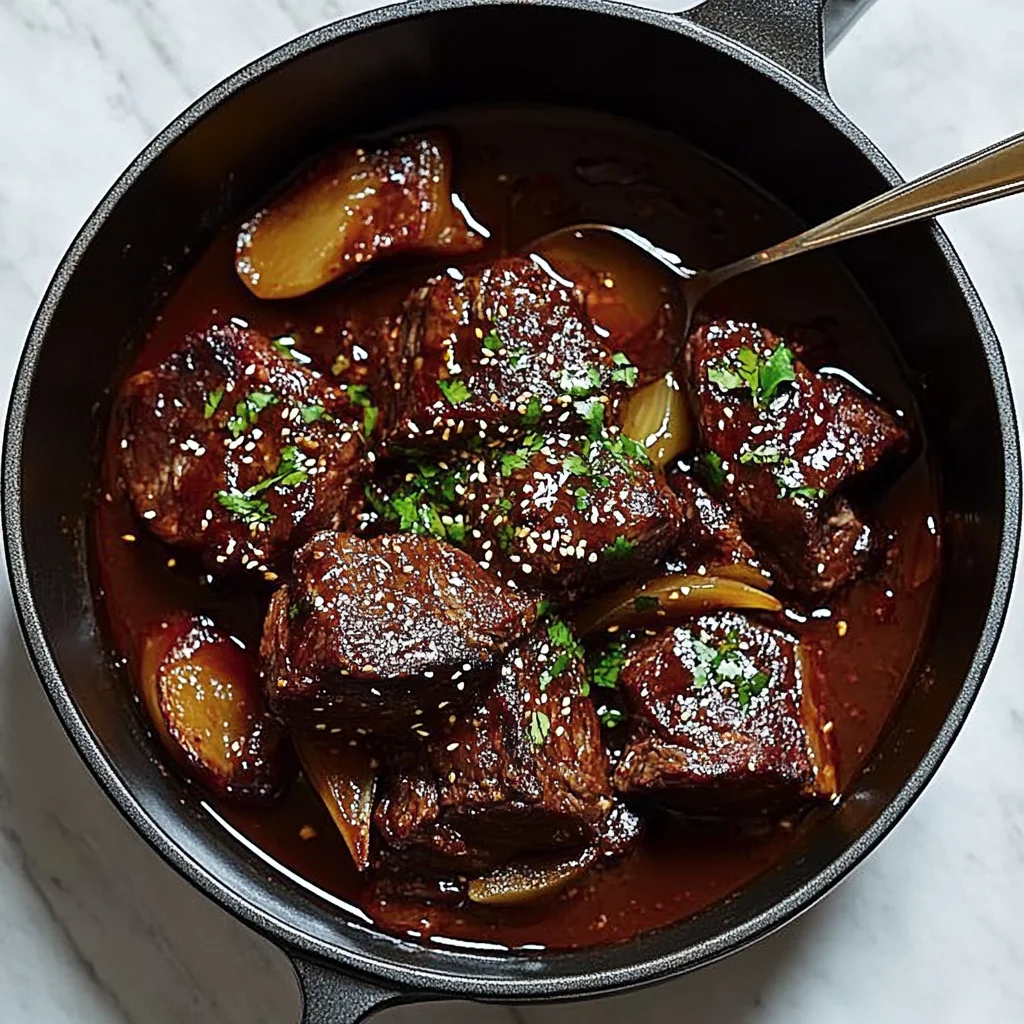
Korean Style Pot Roast is a delightful twist on a classic dish that brings rich flavors and tenderness to the table. This recipe combines the hearty goodness of beef chuck roast with the unique spices and sauces of Korean cuisine, making it perfect for family dinners, special occasions, or even meal prep for the week ahead. The comforting blend of savory and sweet notes will leave everyone asking for seconds.
Why You’ll Love This Recipe
- Bold Flavors: The combination of gochujang, garlic, and ginger creates an irresistible taste that will excite your palate.
- Easy Preparation: With simple steps and minimal hands-on time, this recipe is great for both beginners and experienced cooks.
- Versatile Serving Options: Enjoy it over rice or with sides like kimchi for a complete meal that suits any occasion.
- Tender Meat: Slow cooking ensures that the beef becomes melt-in-your-mouth tender, perfect for satisfying hunger.
- Make-Ahead Friendly: This pot roast can easily be prepared in advance, making it an excellent choice for busy weeknights.
Tools and Preparation
To make your Korean Style Pot Roast as smooth as possible, having the right tools on hand can make a significant difference.
Essential Tools and Equipment
- Dutch oven or heavy pot
- Cutting board
- Sharp knife
- Measuring spoons and cups
- Wooden spoon or spatula
Importance of Each Tool
- Dutch oven or heavy pot: Ideal for slow cooking, it retains heat well and distributes it evenly, ensuring delicious results.
- Sharp knife: A good knife makes chopping ingredients quick and easy, enhancing your overall cooking experience.
Ingredients
For the Beef Roast
- 4 to 5 lbs beef chuck roast, cut into 3-inch pieces
- 1 tbsp kosher salt
- 1 tbsp vegetable oil
- 1 sweet onion, sliced
- 6 garlic cloves, minced
- 1 tbsp fresh ginger, grated
- 2 tbsp gochujang (Korean chili paste)
- ¼ cup brown sugar
- ½ cup soy sauce (or coconut aminos)
- 2 cups beef broth
For Serving
- Cooked rice, for serving
- Fresh cilantro, for garnish
- Kimchi, for serving
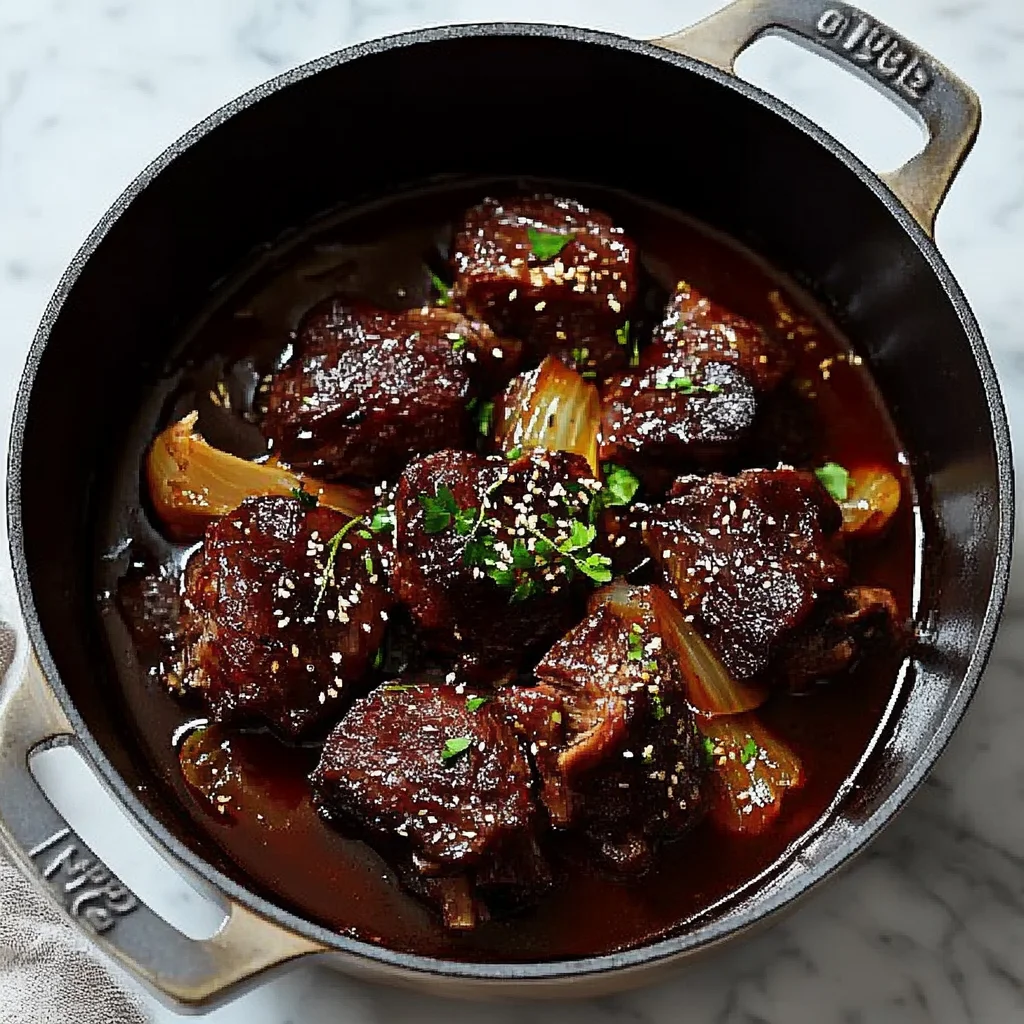
How to Make Korean Style Pot Roast
Step 1: Prepare the Ingredients
Start by cutting the beef chuck roast into 3-inch pieces. Season generously with kosher salt. Slice the sweet onion and mince the garlic cloves. Grate the fresh ginger.
Step 2: Sear the Meat
In a Dutch oven or heavy pot, heat vegetable oil over medium-high heat. Add the seasoned beef pieces in batches to avoid overcrowding. Sear each side until browned. Remove the meat and set aside.
Step 3: Sauté Aromatics
In the same pot, add sliced onion and cook until translucent. Add minced garlic and grated ginger; sauté for about 1 minute until fragrant.
Step 4: Build the Sauce
Stir in gochujang and brown sugar until well combined. Pour in soy sauce (or coconut aminos) and beef broth. Mix thoroughly to incorporate flavors.
Step 5: Combine Everything
Return seared beef to the pot. Ensure all pieces are submerged in sauce. Bring to a gentle simmer.
Step 6: Slow Cook
Cover tightly with a lid and reduce heat to low. Let it cook slowly for about 3-4 hours or until meat is fork-tender.
Step 7: Serve
Once done cooking, serve hot over a bed of cooked rice. Garnish with fresh cilantro and enjoy alongside kimchi!
How to Serve Korean Style Pot Roast
Serving Korean Style Pot Roast can elevate any meal. This dish pairs well with various sides and garnishes that complement its rich flavors.
With Rice
- Steamed White Rice: A classic pairing that absorbs the savory sauce beautifully.
- Fried Rice: Adds a delicious twist with additional vegetables and eggs.
With Vegetables
- Sautéed Bok Choy: Quickly cooked for a crunchy contrast to the tender meat.
- Roasted Carrots: Their natural sweetness balances the robust flavors of the pot roast.
Garnishes
- Fresh Cilantro: Adds a fresh, aromatic touch when sprinkled on top just before serving.
- Kimchi: Provides a spicy, tangy kick that enhances the overall flavor profile.
How to Perfect Korean Style Pot Roast
To achieve a perfect Korean Style Pot Roast, consider these simple tips that enhance flavor and texture.
- Choose the Right Cut: Use beef chuck roast for its marbling, which keeps it juicy during cooking.
- Sear Before Braising: Browning the meat first adds depth to the flavor, creating a savory crust.
- Balance Sweetness and Heat: Adjust gochujang and brown sugar to achieve your desired spice level.
- Cook Low and Slow: Allowing the roast to cook at low temperatures makes it tender and flavorful.
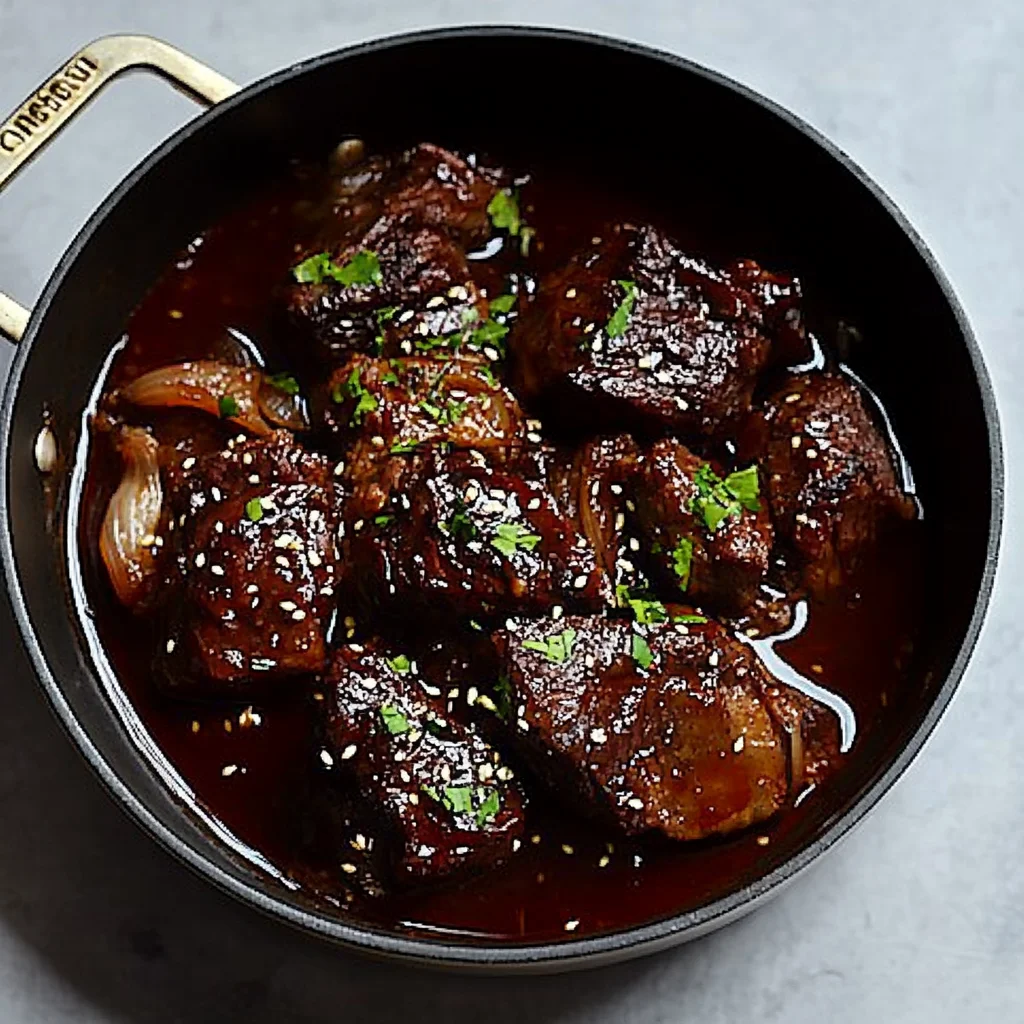
Best Side Dishes for Korean Style Pot Roast
Complement your Korean Style Pot Roast with these delightful side dishes. Each brings out unique flavors that enhance your dining experience.
- Kimchi Fried Rice: A hearty option that incorporates kimchi into fried rice, adding spice and texture.
- Sesame Spinach Salad: Fresh spinach tossed in sesame oil provides a refreshing contrast to the rich pot roast.
- Miso Soup: A light soup that cleanses the palate before enjoying the main dish.
- Cucumber Salad: Crunchy cucumbers in a tangy dressing offer a cool balance to the warm pot roast.
- Steamed Broccoli: A simple yet nutritious side that adds color and nutrients to your plate.
- Scallion Pancakes: These flaky pancakes provide a delightful crunch and complement the meal perfectly.
Common Mistakes to Avoid
When making Korean Style Pot Roast, it’s easy to overlook some key details. Here are common mistakes to watch out for:
- Skipping the seasoning: Failing to season your beef thoroughly can lead to bland results. Always use kosher salt to enhance the meat’s flavor before cooking.
- Cutting the meat too small: If you cut the roast into pieces that are too small, they may dry out during cooking. Aim for 3-inch pieces for the best texture and juiciness.
- Ignoring marinating time: Not allowing the flavors to meld can limit taste. Let the roast marinate for at least a few hours or overnight for maximum impact.
- Using low-quality broth: A poor-quality beef broth can affect the overall flavor. Choose a high-quality broth or make your own for richer taste.
- Overcooking the vegetables: Adding vegetables too early can cause them to become mushy. Add them in the last hour of cooking for better texture and flavor.
Storage & Reheating Instructions
Refrigerator Storage
- Store leftover Korean Style Pot Roast in an airtight container.
- It will last up to 3-4 days in the refrigerator.
- Make sure it is completely cool before sealing for storage.
Freezing Korean Style Pot Roast
- Freeze portions in airtight containers or freezer bags.
- It can be frozen for up to 3 months.
- Label containers with dates to track freshness.
Reheating Korean Style Pot Roast
- Oven: Preheat your oven to 350°F (175°C). Cover the roast with foil and heat for about 20-30 minutes until warmed through.
- Microwave: Place individual portions in a microwave-safe dish. Cover loosely and heat on medium power in 1-minute intervals until hot.
- Stovetop: Heat in a skillet over medium-low heat, stirring occasionally, until warmed through. Add a splash of beef broth if needed to keep it moist.
Frequently Asked Questions
What makes Korean Style Pot Roast different?
Korean Style Pot Roast features unique flavors from ingredients like gochujang and ginger, giving it a distinct taste compared to traditional pot roasts.
Can I use a different cut of meat?
Yes, while chuck roast is recommended, other cuts like brisket or round can also work. Just adjust cooking times accordingly based on thickness.
How spicy is Korean Style Pot Roast?
The spice level largely depends on how much gochujang you use. Start with less if you’re unsure, and adjust according to your preference.
What should I serve with Korean Style Pot Roast?
This dish pairs beautifully with cooked rice, fresh cilantro, and kimchi for authentic Korean flavors.
Can I customize this recipe?
Absolutely! You can add other vegetables like carrots or potatoes, or adjust sweetness by varying brown sugar amounts according to your taste.
Final Thoughts
Korean Style Pot Roast is not only delicious but also versatile. Its rich flavors and tender texture make it perfect for family dinners or gatherings. Don’t hesitate to customize it with your favorite veggies or adjust spices according to your preferences. Give this recipe a try; you’ll love its comforting essence!
Korean Style Pot Roast
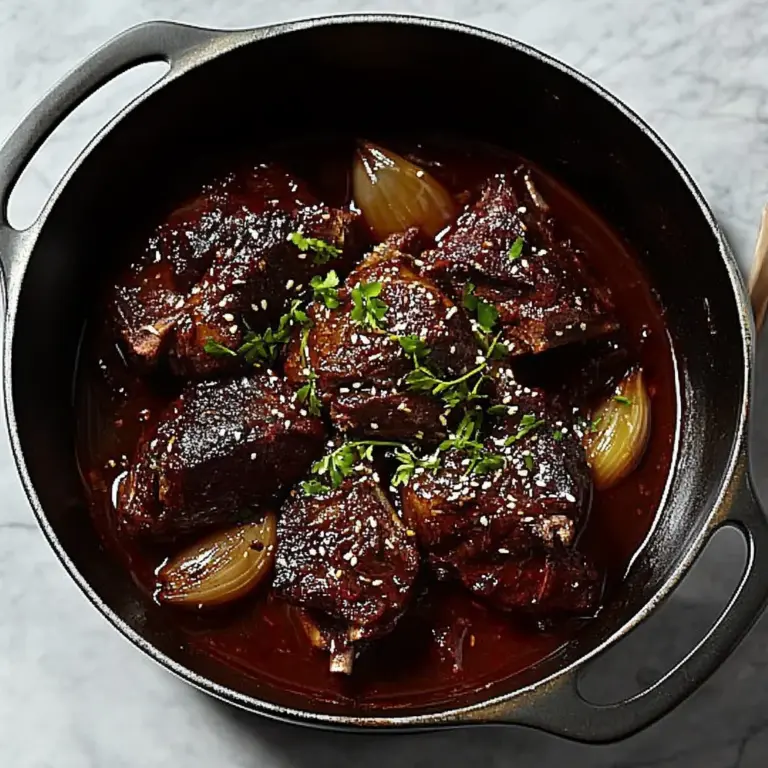
Korean Style Pot Roast is a delightful and flavorful take on a classic favorite. This dish features tender beef chuck roast slow-cooked to perfection, infused with the bold flavors of gochujang, garlic, and ginger. It’s perfect for family dinners or meal prep and is sure to impress with its rich taste profile that balances savory and sweet notes. Serve this mouthwatering pot roast over steamed rice, alongside tangy kimchi, for an authentic Korean dining experience.
- Total Time: 4 hours 20 minutes
- Yield: Serves approximately 6 to 8 people 1x
Ingredients
- 4 to 5 lbs beef chuck roast
- 1 tbsp kosher salt
- 1 tbsp vegetable oil
- 1 sweet onion
- 6 garlic cloves
- 1 tbsp fresh ginger
- 2 tbsp gochujang
- ¼ cup brown sugar
- ½ cup soy sauce
- 2 cups beef broth
Instructions
- Cut the beef chuck roast into 3-inch pieces and season with kosher salt.
- Heat vegetable oil in a Dutch oven over medium-high heat. Sear the beef pieces until browned, then remove.
- In the same pot, sauté sliced onion until translucent. Add minced garlic and grated ginger; cook until fragrant.
- Stir in gochujang and brown sugar, then add soy sauce and beef broth; mix well.
- Return the seared beef to the pot, ensuring all pieces are submerged in sauce. Bring to a simmer.
- Cover tightly and reduce heat to low; cook for 3-4 hours until fork-tender.
- Serve hot over cooked rice and garnish with fresh cilantro.
- Prep Time: 20 minutes
- Cook Time: 240 minutes
- Category: Main
- Method: Slow Cooking
- Cuisine: Korean
Nutrition
- Serving Size: 1 serving
- Calories: 398
- Sugar: 8g
- Sodium: 910mg
- Fat: 20g
- Saturated Fat: 7g
- Unsaturated Fat: 12g
- Trans Fat: 0g
- Carbohydrates: 20g
- Fiber: 1g
- Protein: 32g
- Cholesterol: 108mg
Keywords: For added depth of flavor, consider marinating the beef overnight in soy sauce and spices. Feel free to customize by adding vegetables like carrots or potatoes during cooking for extra nutrition.